
#13: Visa (fun) run
From mischievous monkeys to misty mountaintops

Once Buddy was settled in with Rhea, we were finally prepared to head to Sri Lanka for the first leg of our visa run.
A few days before leaving, we ran into a wrinkle: Sri Lanka required proof of onward travel. We didn’t know our next flight destination yet, because our return to India depended on the intensive schedule, which was never fixed. That meant we needed a workaround. We found a service that provides a temporary onward ticket—basically, they book and cancel a flight for you so you can show proof of exit without actually committing to a full route. I sent them my passport info and then, after paying, read a few reviews claiming the whole thing was a scam.
Cue the panic. I spent the last few hours before leaving freezing my credit accounts, buying an identity protection service, imagining worst-case scenarios, and packing my underwear. You know, the typical pre-trip routine. Thankfully, the service proved to be legitimate; the ticket worked, the border agent barely glanced at it, and we boarded our flight to Sri Lanka with no hangups.
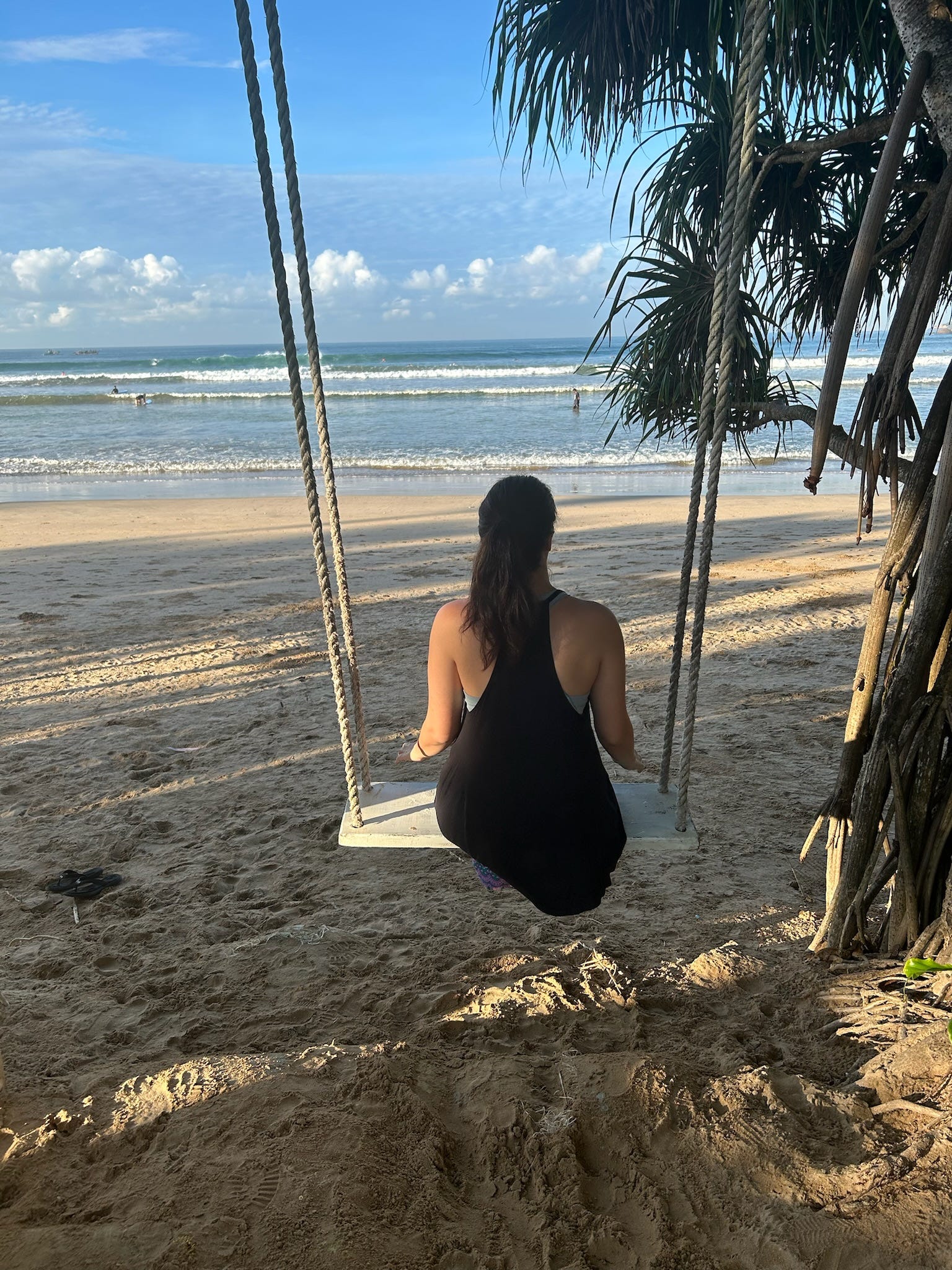
Sri Lanka itself felt like India’s close cousin—similar in some ways, but with its own quirks. The people and dress looked similar. The food looked like Indian food, but with far fewer spices. We had gotten used to such flavorful dishes; it was actually a bit disappointing. Our first stop was a small surf town named Weligama, where our days were split between the beach, tropical fruit, surfing, and Toriya working remotely from whatever table we could turn into an office. We were living the nomad’s dream.
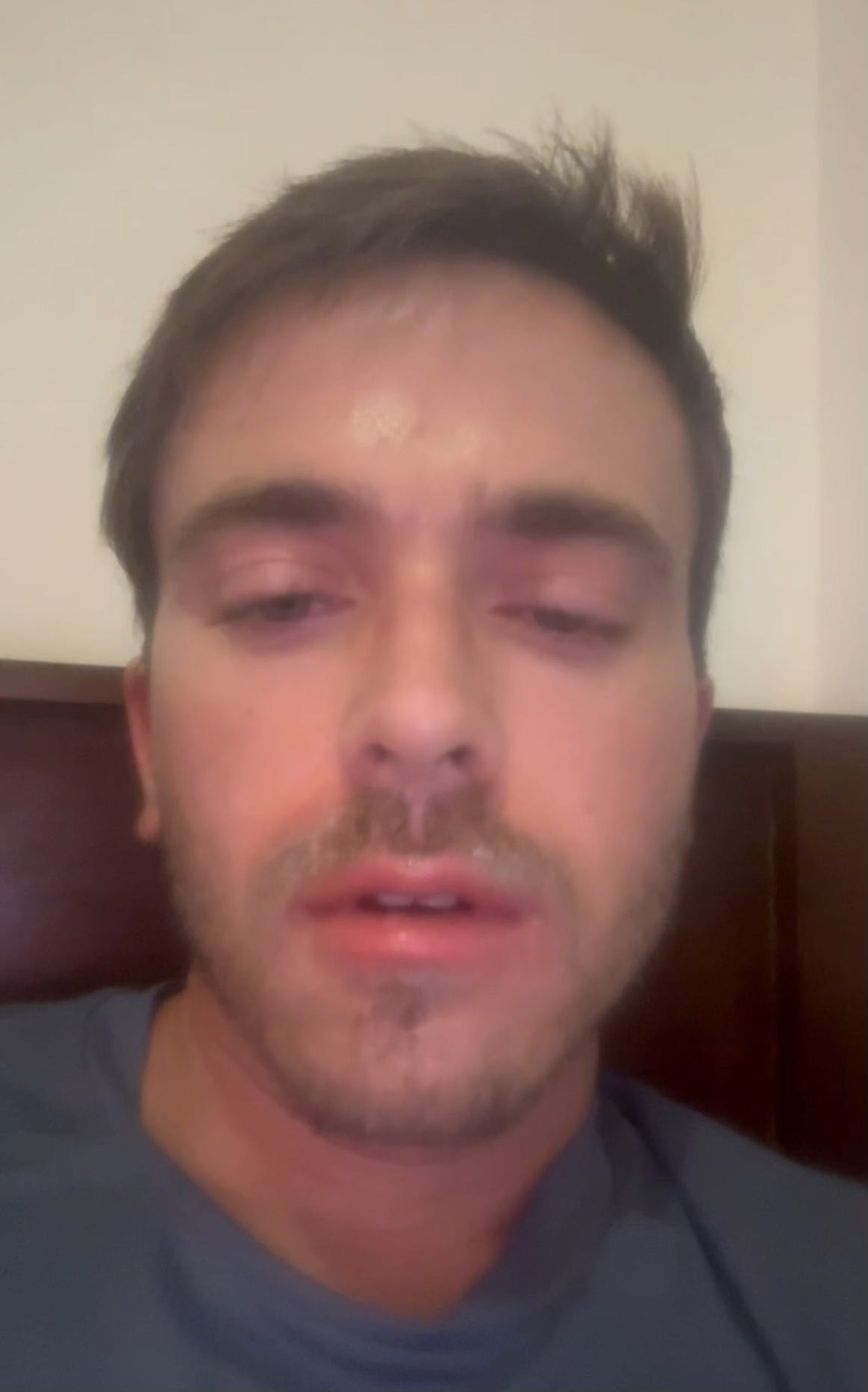
Then my skin broke out in a rash around my lips, eyes, and ears. I was raised by old-school hippies, and I can count on two hands how many times I’ve been to the doctor, so I usually avoid medical trips unless absolutely needed. Well, after about a miserable week of being unable to eat, drink, be in the sun, or essentially exist without discomfort, I finally gave in. A quick visit to a local clinic later, I found out it was contact dermatitis. Basically, my nervous system was throwing a tantrum over some environmental irritant. A combination of antihistamines and steroid cream calmed it down, but it was a good reminder that “tropical paradise” still has fine print.
From Sri Lanka, we flew to Kuala Lumpur, Malaysia.
Landing in KL was like switching dimensions. After months of rickshaws and jungle roads, suddenly we were in a city of highways, skyscrapers, and giant malls. We wandered air-conditioned corridors just for the novelty of it.
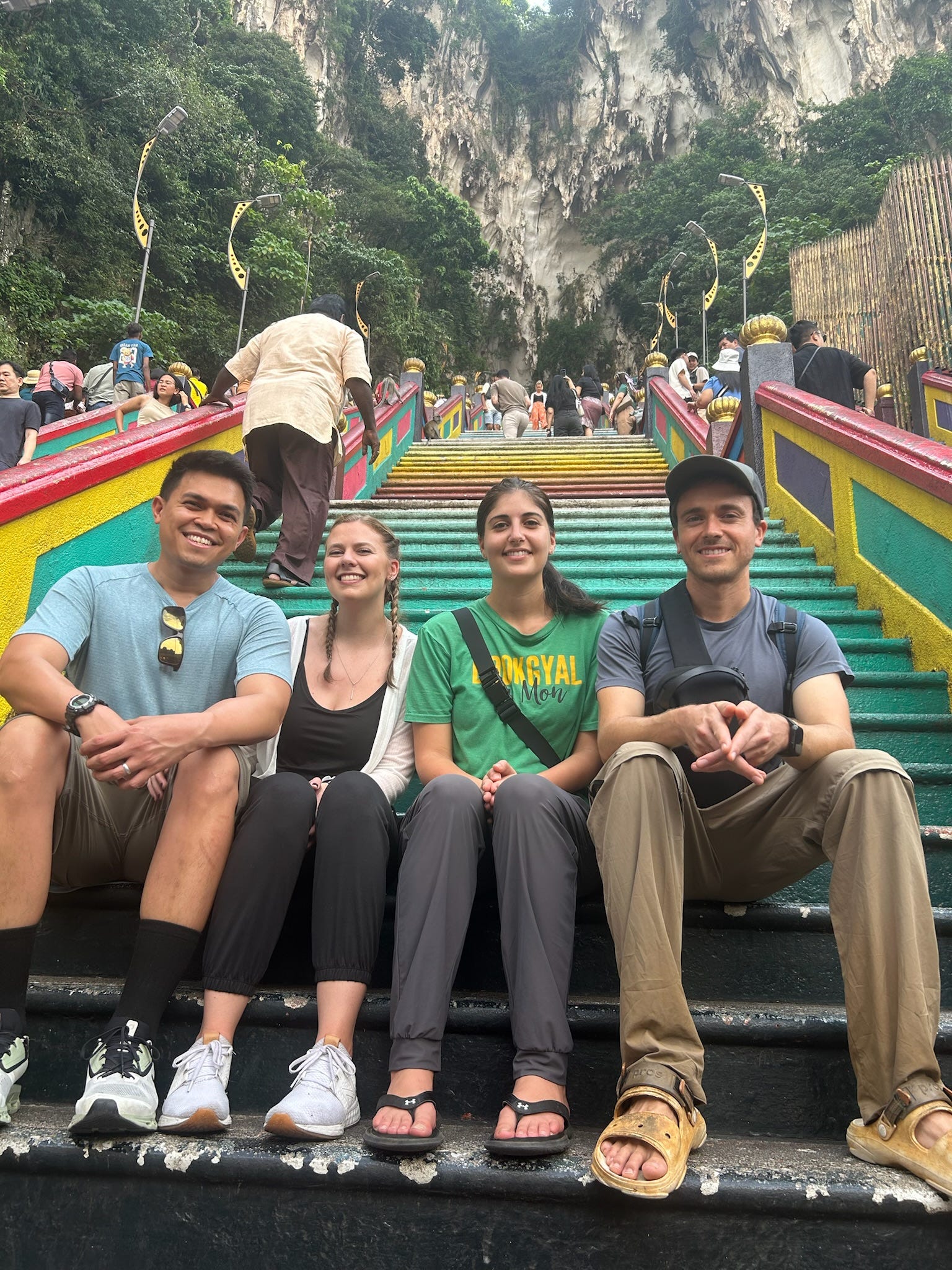
One of the highlights was meeting up with our friends Arif and Brittany, who were old work friends from Southwestern Advantage. Arif is originally from Malaysia and happened to be visiting family for the holidays while we were in KL. There’s something special about visiting a country and being shown around by a friend who’s from there. They took us to a few temples, a bird sanctuary, and later to a local spot where the main attraction was monkeys. A lot of monkeys.
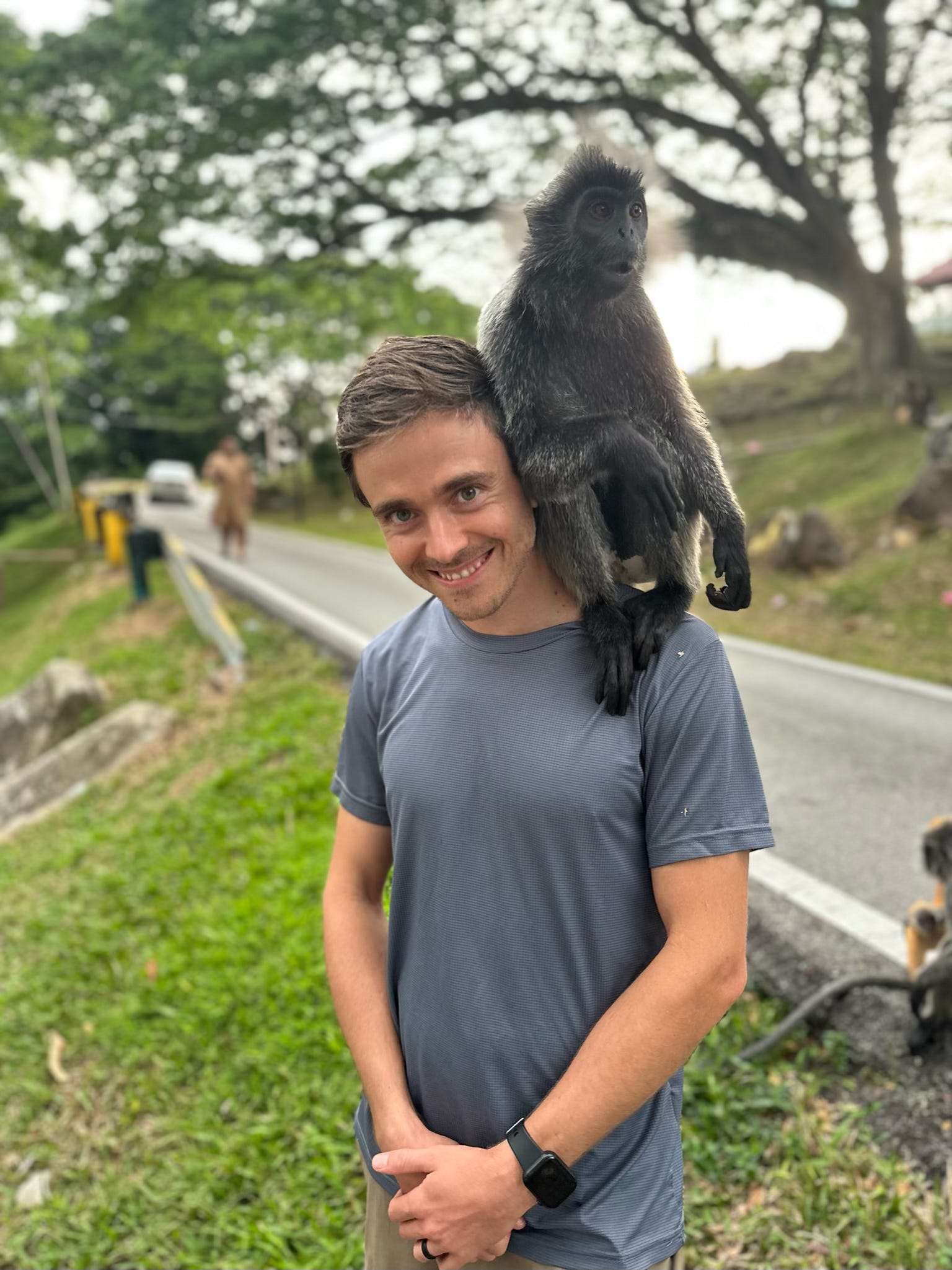
I’ve always loved monkeys, but this was a different level. These little guys were so comfortable with humans that you could hold out food, and they’d leap onto your shoulders to sit and munch on the snack. At one point, I had monkeys on each arm and one perched on my head. One had a baby nestled on her chest while she sat on my shoulder and let me lightly pet her baby while she munched on a peanut. I’ve been to many places all over the world, and that still stands as one of my favorite experiences of all time. I was in monkey heaven.
That night, we took a boat ride to watch fireflies along the riverbanks. Drifting on dark water while thousands of tiny lights pulsed in the trees felt like sitting inside a living constellation.
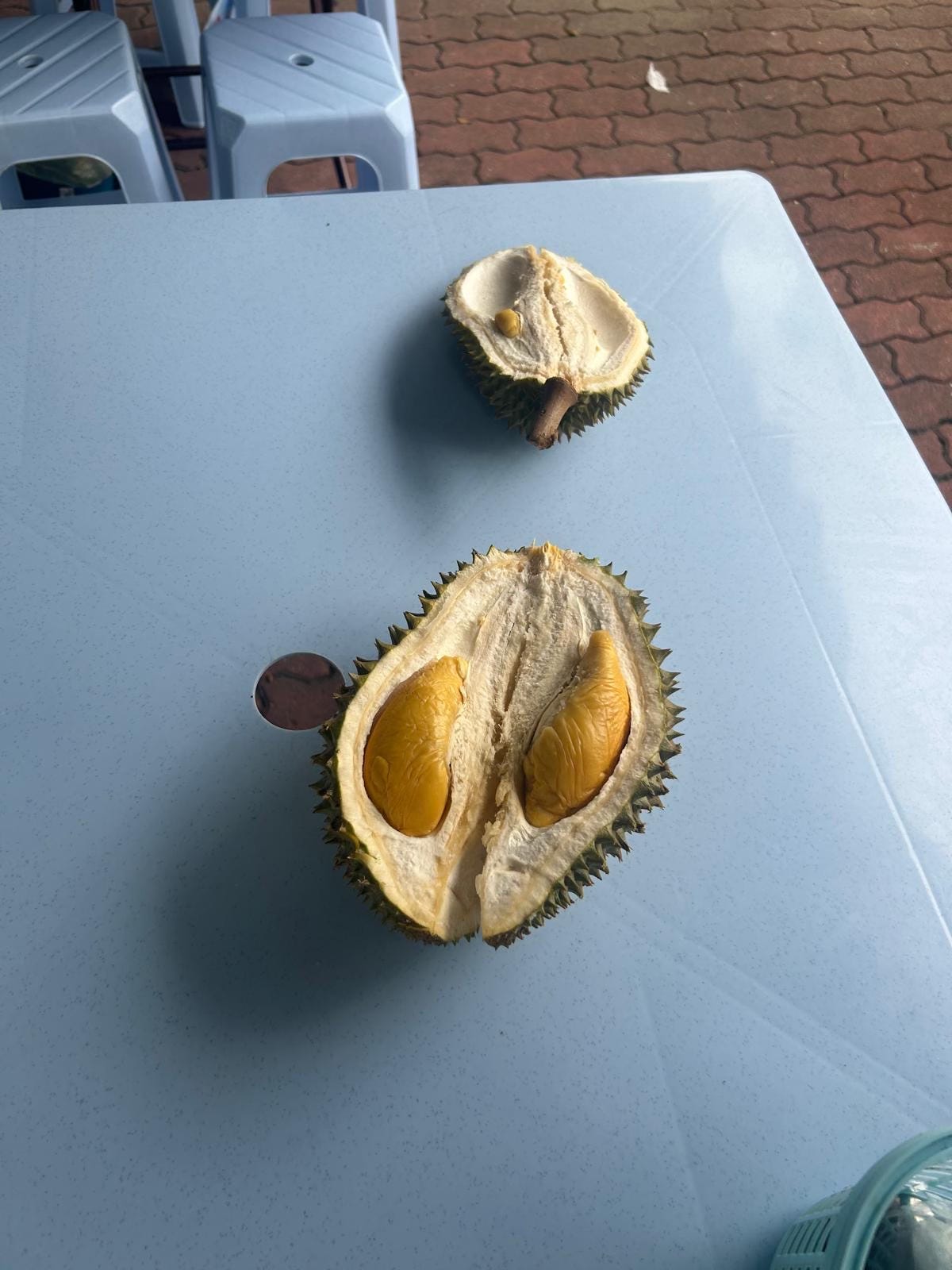
We also tried durian for the first time. It’s known to be a pretty divisive fruit, and I landed firmly in the “not my thing” camp. The flavor was… interesting. Not terrible, but it tasted like a savory soup that was disguised as a fruit, and the texture didn’t help: a thin outer film layer covering a goopy mush. Plus, when entire buildings have “no durians allowed” signs, and they hand you plastic gloves to wear while you eat, it doesn’t scream, “This is delicious!”
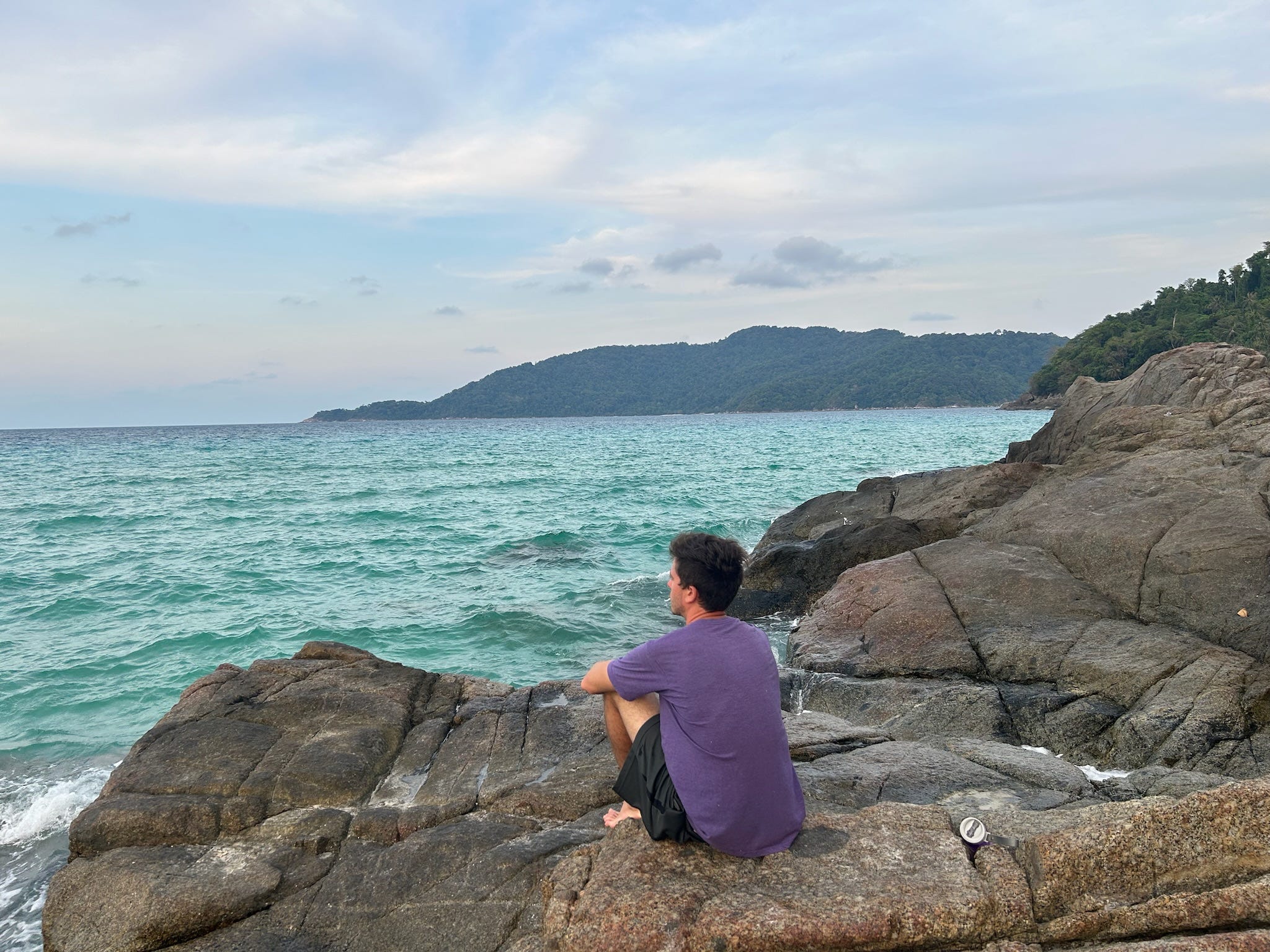
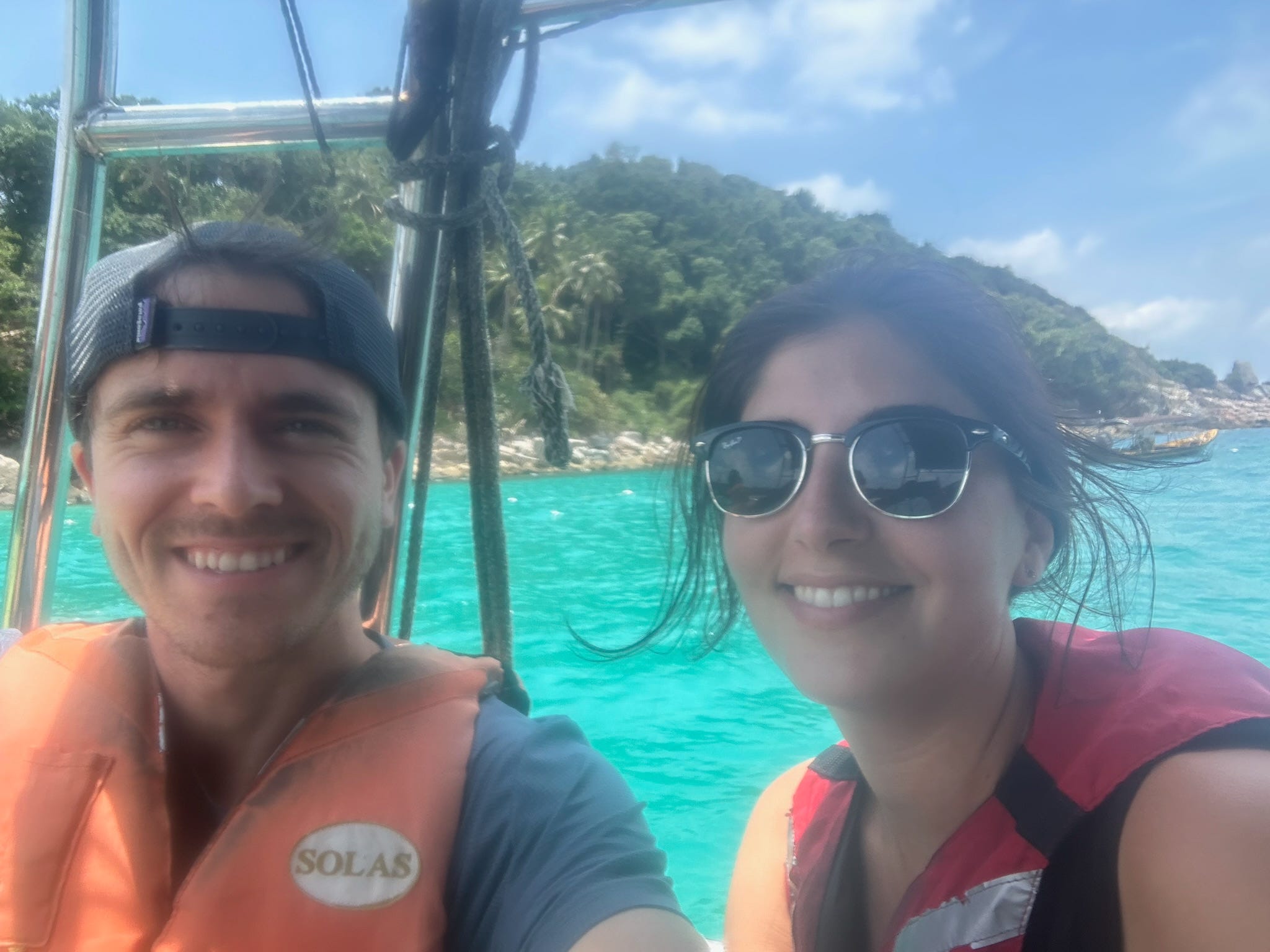
On Arif’s recommendation, we headed next to the Perhentian Islands for scuba diving. It was as close to a tropical postcard as I’ve ever been: clear turquoise water, soft sand, and a small hotel right on the beach. We could walk straight from our room into the ocean and dive.
Underwater, we swam past barracudas, sea turtles, swirling schools of silver fish, and even small sharks. Most days were simple: dive, eat, nap, repeat. It was one of those rare stretches where life shrinks down to a few basic, very good things.
From Malaysia, we hopped to Indonesia, starting in Bali.
Since we’re not huge fans of overly touristy scenes, we found a quieter corner of the island. “Quieter” in Bali still means “lots of foreigners,” but at least we weren’t in the thick of the party zones.
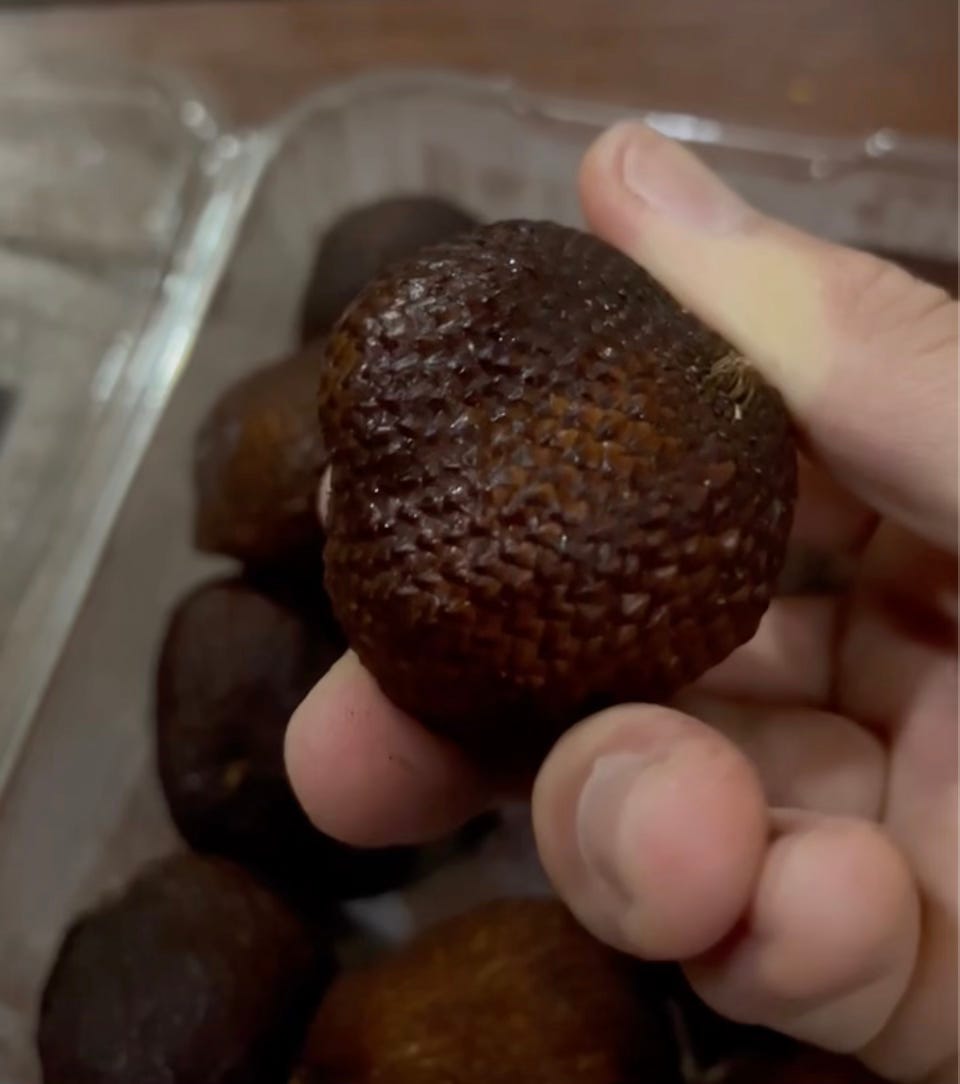
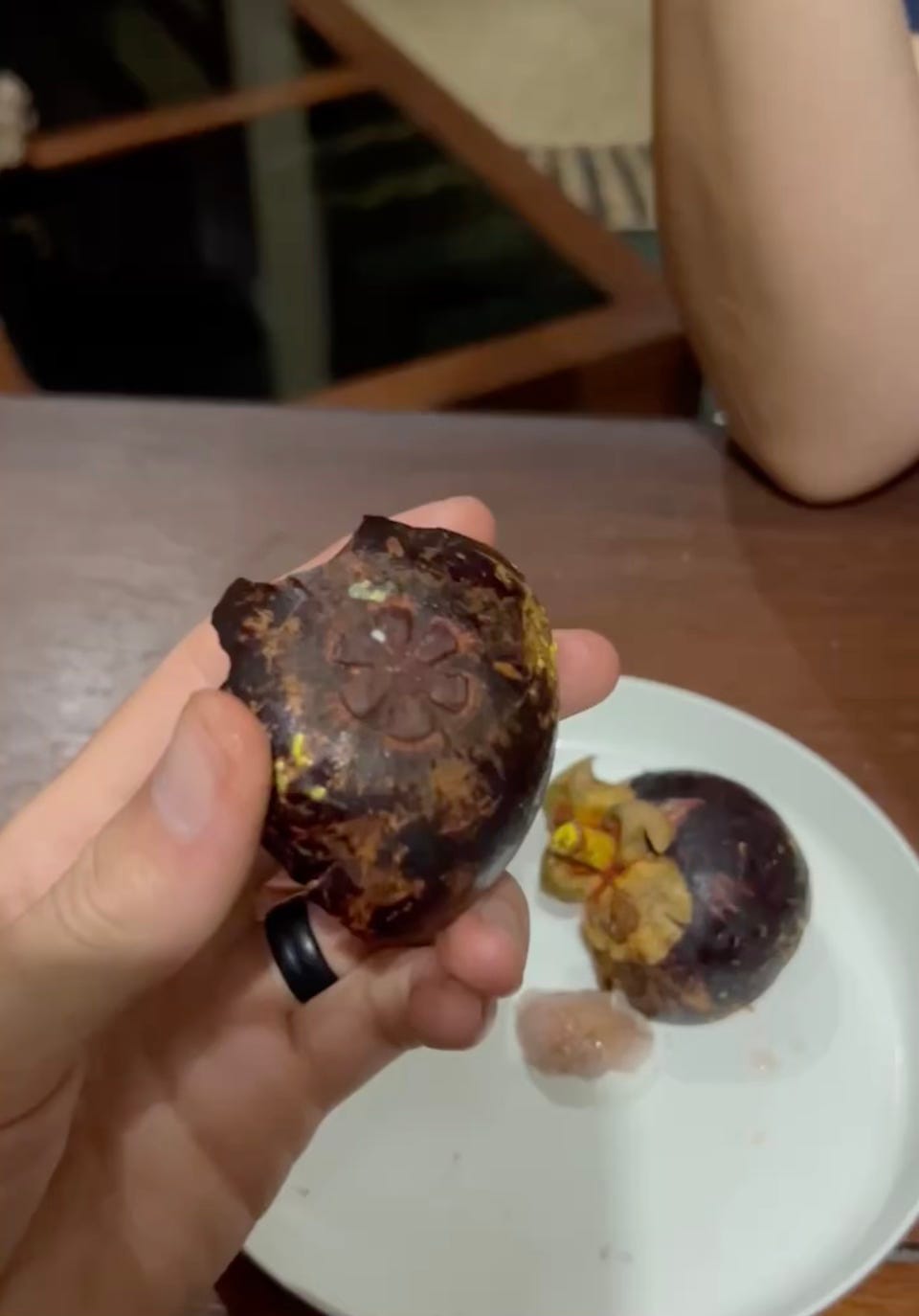
My personal joy in Bali was the fruit. I’d met some unusual fruits in India, but Bali introduced me to new characters: snake fruit, named for its scaly skin that peels like reptile armor, and mangosteen, a small purple fruit whose bottom ridges accurately tell you how many segments are inside. Dragon fruit, custard apple, soursop, fresh juices, and street-side fruit stalls became a daily ritual.
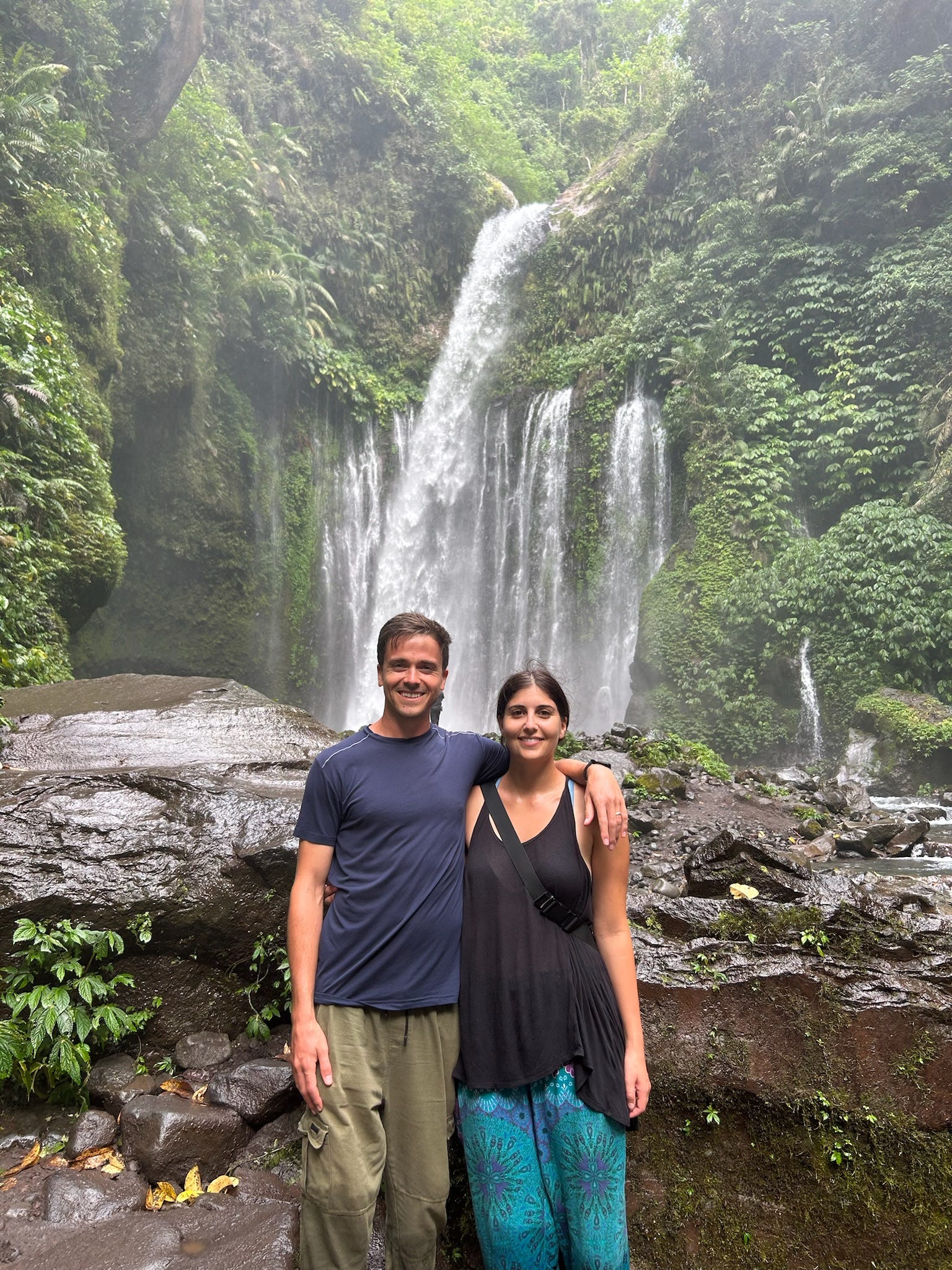
I rented a motorbike for the first time in Asia, and after a few traffic-induced adrenaline spikes, I relaxed into the seemingly hectic flow. We zipped around to ocean viewpoints, a butterfly house, and waterfalls. Each mossy temple and hidden cascade felt surreal, like walking inside a travel ad.
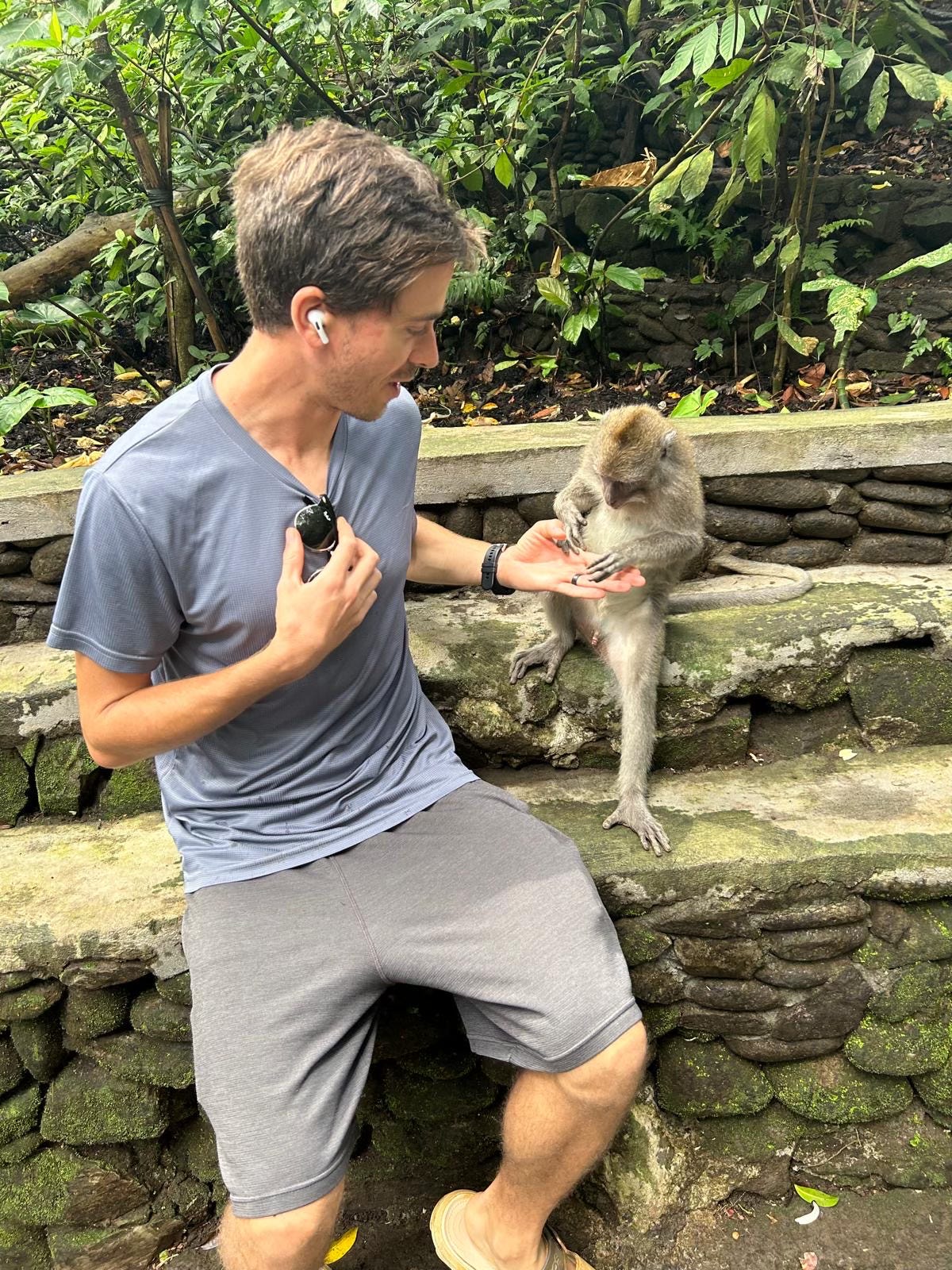
We also visited a legitimate monkey sanctuary in the center of Bali. These monkeys were even bolder than the ones in KL. When we walked in, I watched a monkey steal a coffee from a tourist, drink it, and then throw the cup and walk casually onto my shoulder. Then, thinking I was all hot stuff—the monkey whisperer, the chosen one—I interacted a bit more with other monkeys than I probably should have. They are, after all, still wild animals.
One monkey approached me while I was sitting down and checked my hand for food. Then he looked under it. After seeing I had nothing for him, he got offended and bit me. Twice. I can’t say for certain, but I literally think he bit me simply because he was angry that I didn’t have food for him. Afterwards, I put some hand sanitizer on while we walked to the first aid tent building to get it checked out, and the same little punk came up from behind, stole the hand sanitizer out of my hand, and proceeded to drink it! He looked at me like, “I knew you were holding out on me, you did have a snack!” After he discarded the bottle, I decided that I no longer wanted a sanitizer that had a monkey’s tongue in it. Thankfully, the woman who checked out the bites in first aid said they test the monkeys for diseases regularly. That’s good—I wasn’t too keen on getting rabies.
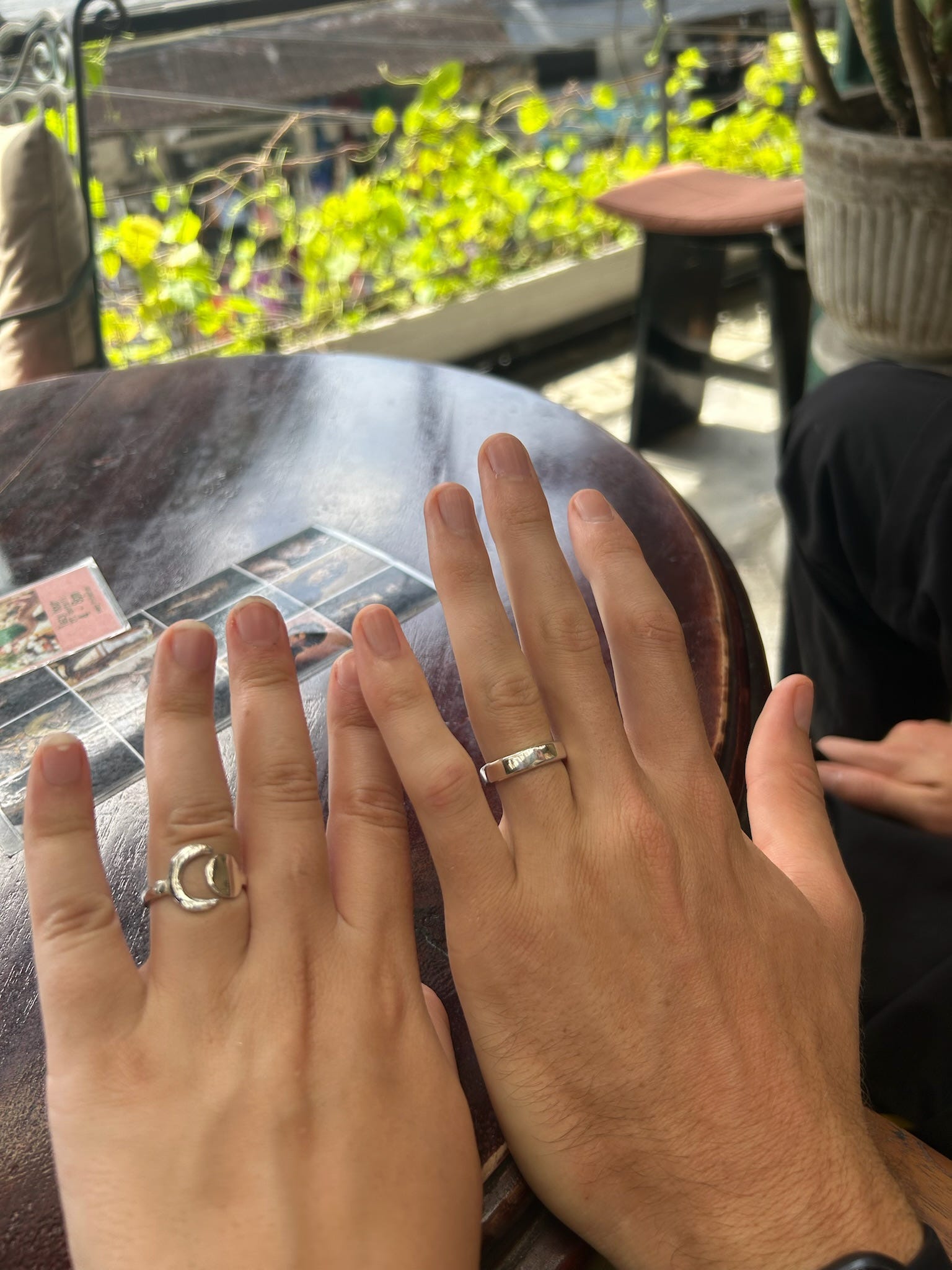
Before leaving Bali, we took a silver ring-making class. With lots of guidance (you’re handling molten metals after all), we created our own rings. Mine became my new wedding band, complete with engraving on the inside.
From Bali, we took a boat to Gili Air, a tiny island you can walk across in about 45 minutes. There are no cars, just pathways, bikes, and the occasional horse cart.
More beach days and tons of snorkeling. On one swim, I came across a baby octopus, no larger than an AirPod case. It let me hold it briefly, suction cups gently exploring my skin, before it slipped away. There’s something particularly moving about close encounters with nature like that. It felt as if God was saying hello to me. The delicate touch of such a tiny, inquisitive creature, the gracefulness of its movements, like a dance through the water. Not to mention the impressive speed at which it darted away once our time together was finished. It was a delicious moment of exquisite beauty, and I’m filled with gratitude even as I recount the memory of it.
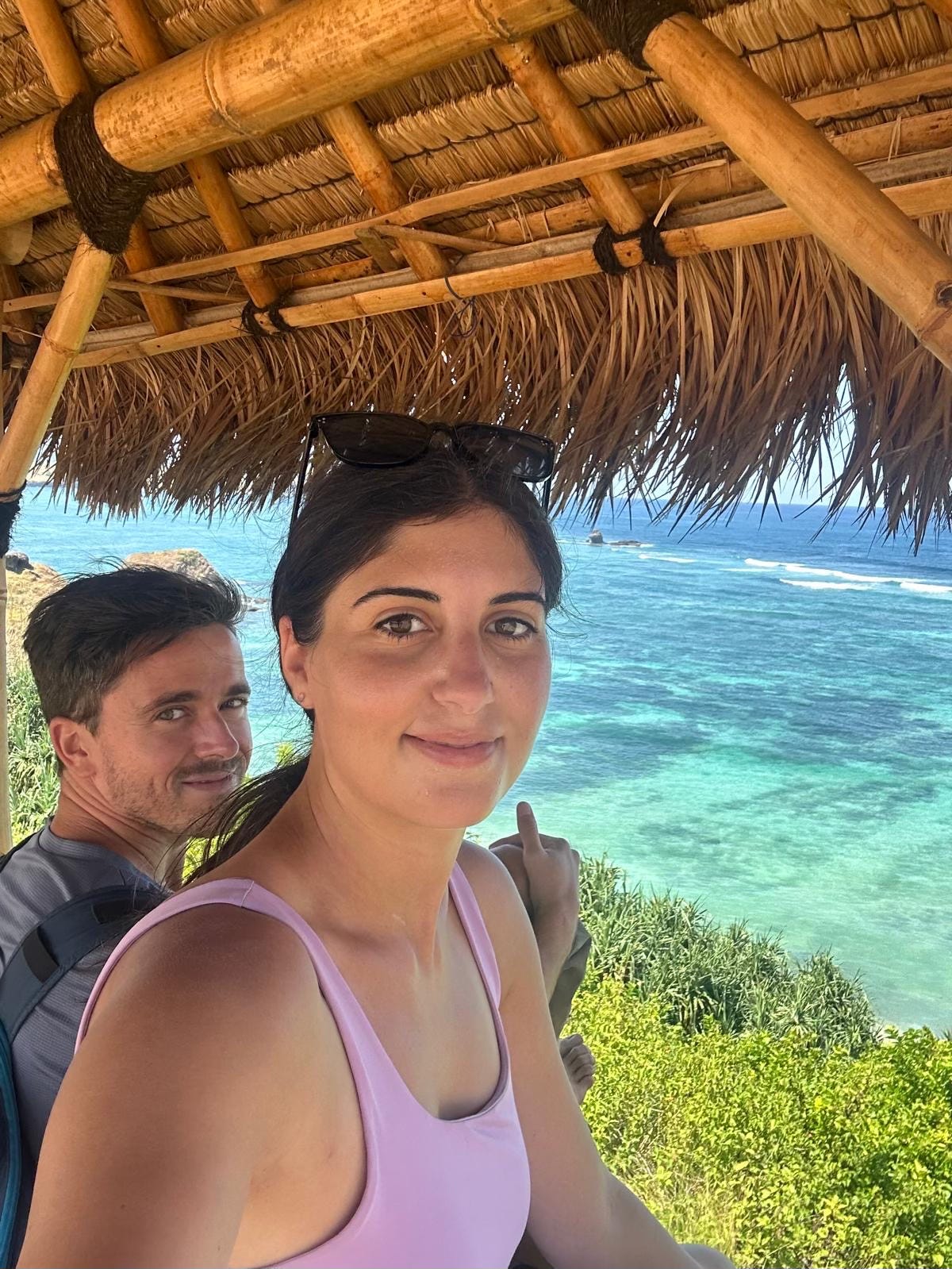
Our last Indonesian stop was Lombok, often described as an “unspoiled Bali.” I gained more confidence on the scooter, and we spent our days exploring more waterfalls, hiking, and soaking in mountain and ocean views.
We went paragliding—running off a hill while a parachute caught the wind and lifted us into the sky. From above, the waves, fields, and villages all shrank into a soft patchwork. It was a thrilling way to take in the whole island. I also signed up for a few kite-surfing lessons, which were equal parts humbling and exhilarating.
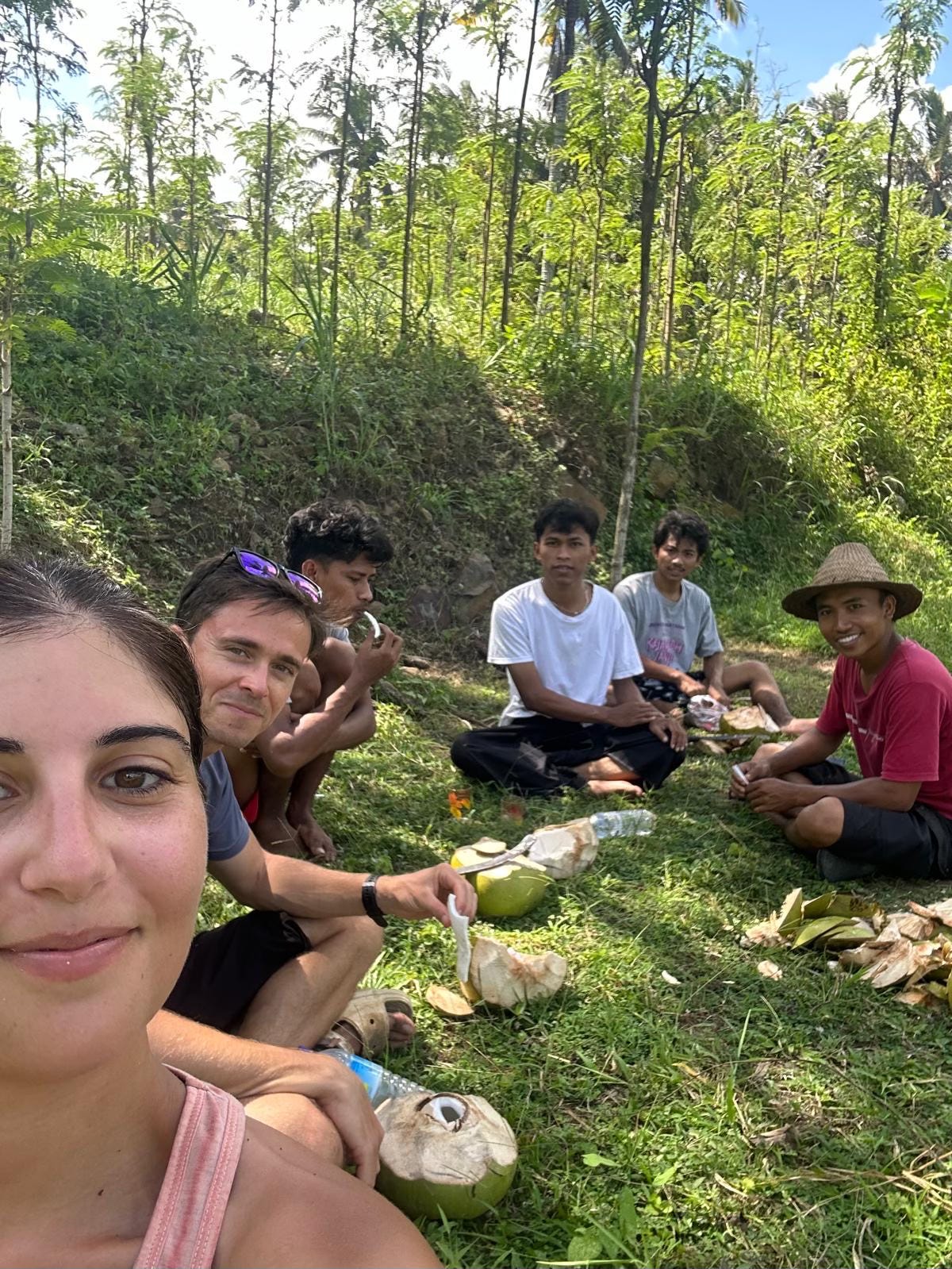
One of our most meaningful moments in Lombok was actually very simple. We were trying to find a small nature reserve and got turned around. A local man we stopped to ask for directions not only guided us there, but also invited us to his home, called over some friends, walked us through the reserve, climbed a tree to gather fresh coconuts, and shared tamarind straight from the tree. No hint of “now you pay me something,” just pure generosity. Since he and his friends help care for the nature reserve, I ended up donating generously. My social defenses are often on alert in foreign countries, always wary of potential scams, but those locals reminded me that most people simply want to connect and show off the country they love.
Our last big adventure on Lombok was Mount Rinjani.
We’d been sold on a three-day trek by a very enthusiastic tour vendor. Rinjani is Indonesia’s second-highest volcano, and while we’d heard it was “challenging,” I didn’t fully grasp what that meant until I was speaking with a fellow kite-surfing student. He said, “I’m in decent shape, I played D2 football in college, but that was one of the most physically challenging things I’ve ever done.” I was less worried about myself and more concerned that Toriya would never speak to me again afterwards. If we survived, of course.
We met our hiking group—a cluster of French travelers fueled by cigarettes and youth—and started up the mountain. Day one was beautiful: misty paths, monkeys in the trees, wide views as we gained elevation. It was challenging, but doable.
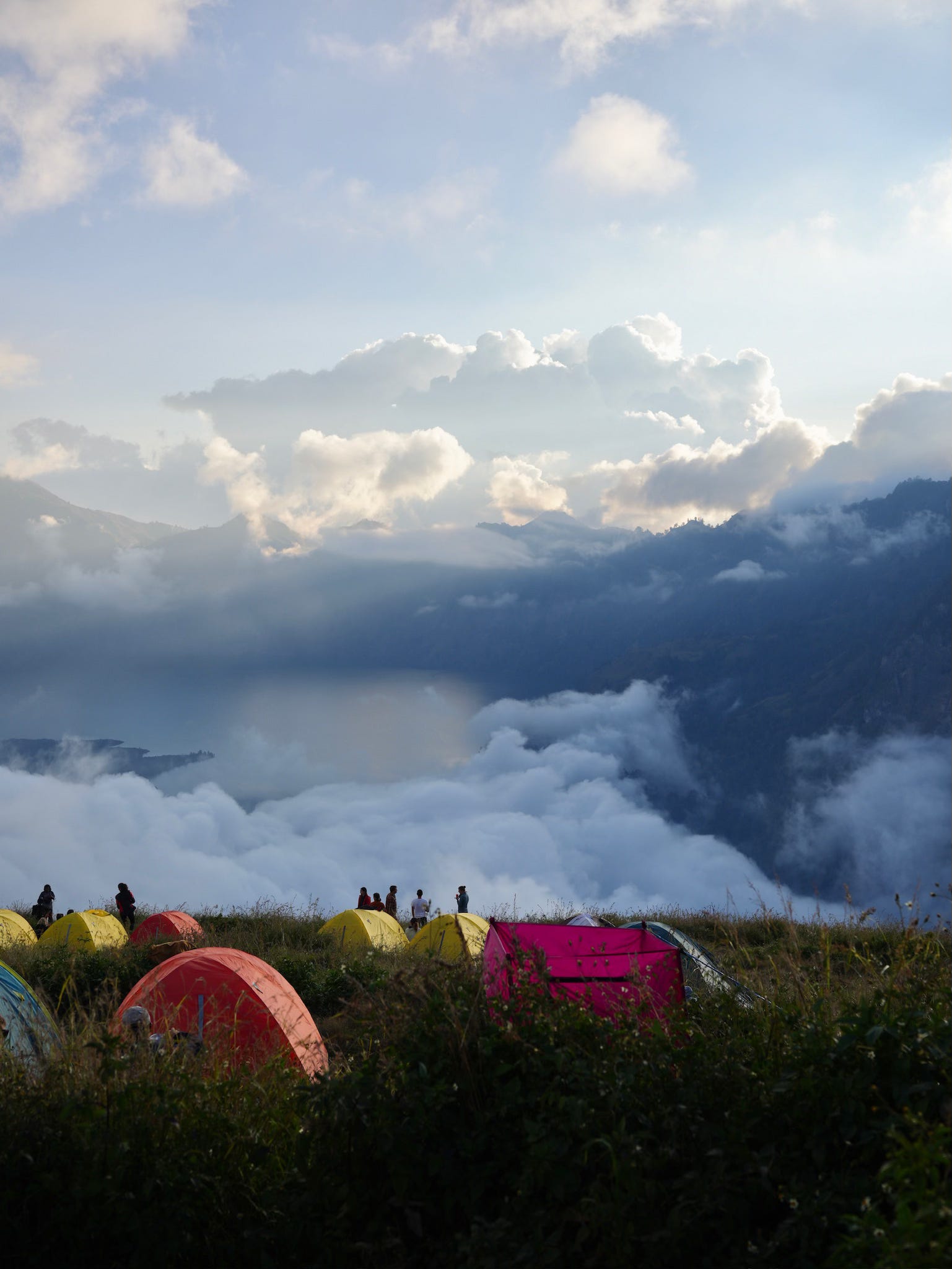
Day two was the real test. We woke up at 2 am for the summit push. I had been told the final climb was the hardest part, and there were about three separate times where I thought, “Ok, this has gotta be the summit.” Then we got to the real summit. The final ascent is essentially a steep slope of loose volcanic scree. To make sure I wasn’t exaggerating, I looked it up, and this is what Google said: “The final ascent to the summit of Mount Rinjani has sections with an incline of approximately 45° to 60°, particularly through areas with loose volcanic sand and gravel.” For every step you take forward, you slide halfway back. The incline felt never-ending, like climbing a giant sand dune in the dark.
For the entire final stretch, we alternated between me crawling with Toriya hanging onto my backpack, or me walking behind her, pushing her up while she crawled. I was getting nervous, because the sun was starting to come up, and after all that work, I wasn’t sure if we’d make it by sunrise or not. Somewhere in the struggle, I noticed I wasn’t actually on the mountain anymore; I was already at the summit in my head, trying to get my body there faster. Every step became an obstacle on the way to “being done.”
And of course, whenever I do something just to get somewhere else, I don’t enjoy either the doing or the getting. I was making myself exhausted, mentally and emotionally. The second I stopped arguing with the slope and let the climb just be one slow step, then another, the mountain didn’t get easier, but the inner resistance stopped dragging me down. It’s amazing how much extra energy we can waste with our minds.
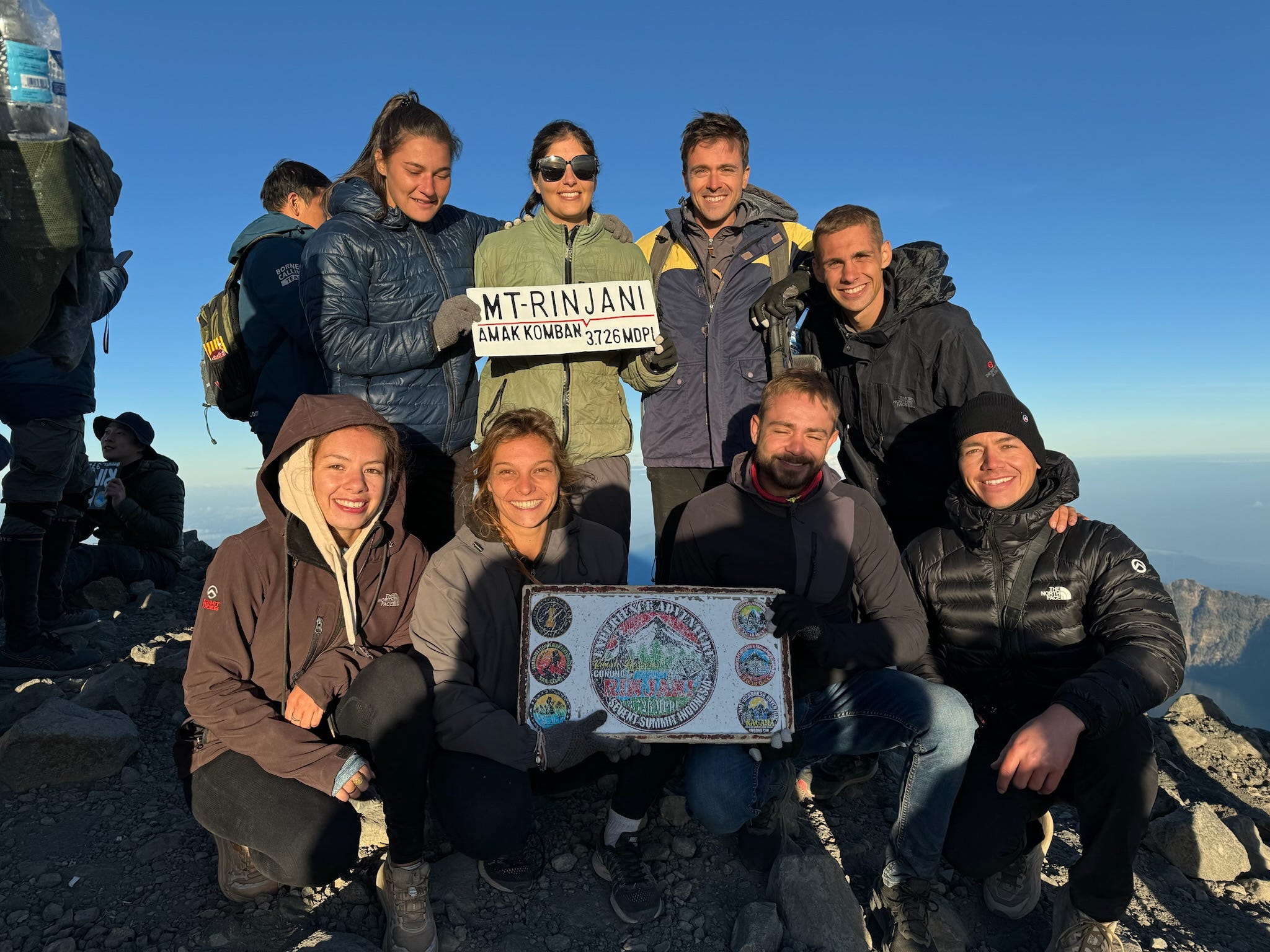
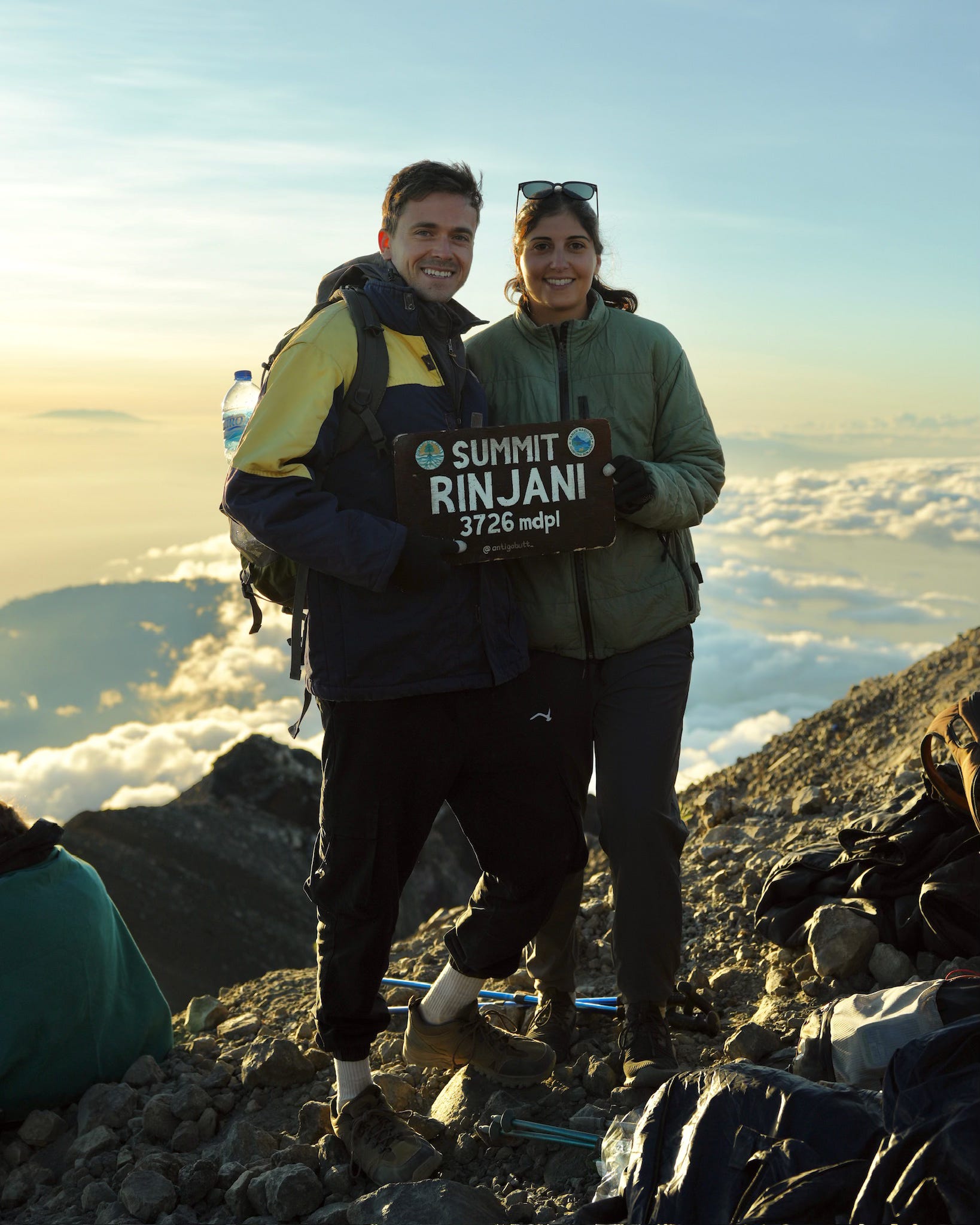
We made it to the summit literally right on time to watch the sunrise spill over the crater and surrounding peaks. Rinjani stands at 3,726 meters (about 12,224 feet), and looking down into the crater lake with its smoking cone and cloud layers below, I understood why people put themselves through that kind of effort. The views were figuratively and literally breathtaking.
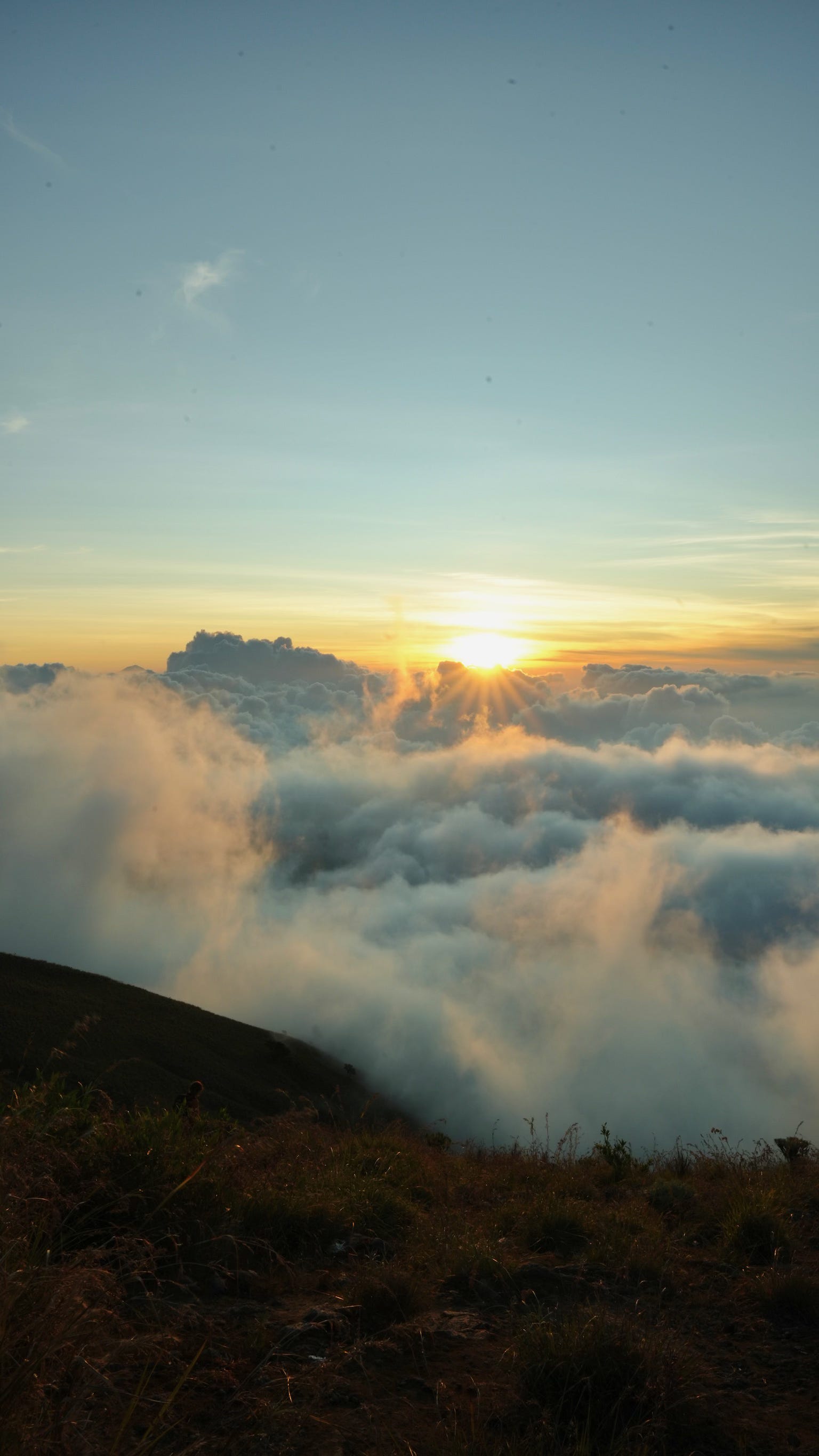
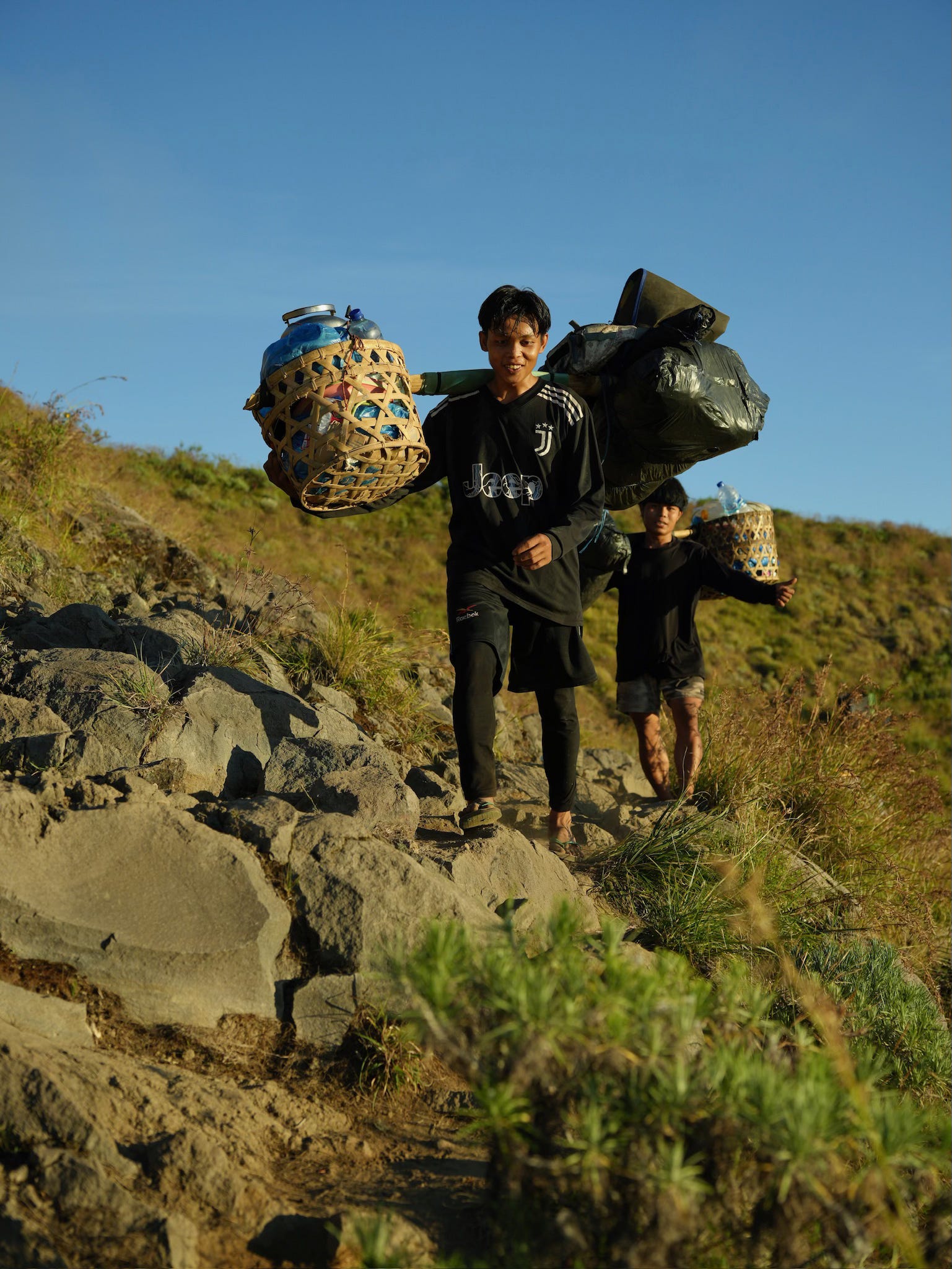
Later that morning, we descended to the crater lake and soaked in hot springs—a welcome reset for sore legs—and then continued the long, dusty journey back down (and up, and down, and up) the mountain. The guides, meanwhile, did the hike in flip-flops, carrying supplies on bamboo poles like it was a casual stroll.
I’m immensely proud of Toriya for finishing the adventure. I may have been a mountain goat in a former life, but while Toriya loves nature, she wasn’t made for strenuous hiking like that. However, she never complained once and still found many moments of joy and appreciation throughout the course of the hike. At the end, she said, “I’m glad I did it, and I’m never doing anything like that again.” I, apparently, wasn’t done with my hiking adventures, as evidenced by my taking on the Appalachian Trail a year later.
After a few final days of rest, we boarded our flight out. We ended up overstaying our Indonesian visa by a day and had to pay a fine, which seemed like a reasonable tax for the memories we’d created.
Coming back to India was unexpectedly emotional.
Travel had been wonderful, but returning felt grounding in a way I didn’t anticipate. At the same time, I couldn’t go straight “home” to the ashram. Because of the recent crackdowns and extra scrutiny around visas, foreigners on tourist visas (like me) were encouraged to travel around inside India as well. The Indian government has a system, called C-forms, for tracking everywhere a foreigner has been during their stay, so they would know if I was only in one spot the whole time. In fact, they had questioned me pretty extensively when we left, asking why we had spent our entire stay in one little town. Apparently, they were having issues with drug-smuggling foreigners, and they wanted to make sure we weren’t doing anything illegal. We weren’t, but any time you’re aggressively questioned by a gruff-looking person in a uniform, it sure makes you feel like you’ve done something wrong. I wanted to do what I could to avoid situations like that moving forward.
So I went to Tiruvannamalai, the town associated with Indian sage Ramana Maharshi. It’s a place where many spiritual seekers go to sit, reflect, and be near the sacred mountain he loved. It gave me a soft landing back into India, a way to feel the inner quiet again before re-entering the intensity of jungle life and the next round of teachings. I traveled around a bit inside India before returning home, and picked up my first case of food poisoning, but perhaps I’ll save those tales for a later post.
Looking back, it would be easy to label this stretch as a detour from the “real” spiritual work, but I see it differently. If anything, the ashram was the classroom, but the exam happens everywhere: in airport immigration lines, guesthouses, monkey forests, mountain slopes, and oceans. Life itself shows us how our inner work holds up when things are uncertain, uncomfortable, or just plain inconvenient.
Little of what happened was in my original plan. The plan was simple and controlled: step out of India, stamp back in, resume life at the ashram. Instead, we got something far wilder and more beautiful; rashes and visa fines, yes, but also fireflies, baby octopuses, exotic fruit, volcano sunrises, and the unreserved kindness of strangers. It’s yet another reminder that my carefully crafted plans rarely turn out to be the most interesting ones. Life’s plan, when I let it unfold, is often messier, less efficient, and usually more fun.
It’s been a very insightful reflection so far. Already, parts of this travel window are turning golden in my memory. What were frustrations in the moment feel fond or funny looking back. Perhaps that’s because when we remember, we’re actually present with the memory. We’re not distracted by mental noise or the “next thing,” and can therefore enjoy it fully. That’s one of my main purposes for practicing: I hope to be that present with my real life; to embrace the moment so fully that I don’t need nostalgia to polish it later.
One can dream. Or rather, stop daydreaming.