
The Long Walk
No, not the Stephen King novel.

I officially started hiking the AT on April 28th.
My brother from another mother, Joe, had told me he’d start with me and hike as long as he could be away from work. Although I was excited to test my mettle out on my own and live in that fertile silence of self-discovery, I was also grateful to be starting off with a friend.
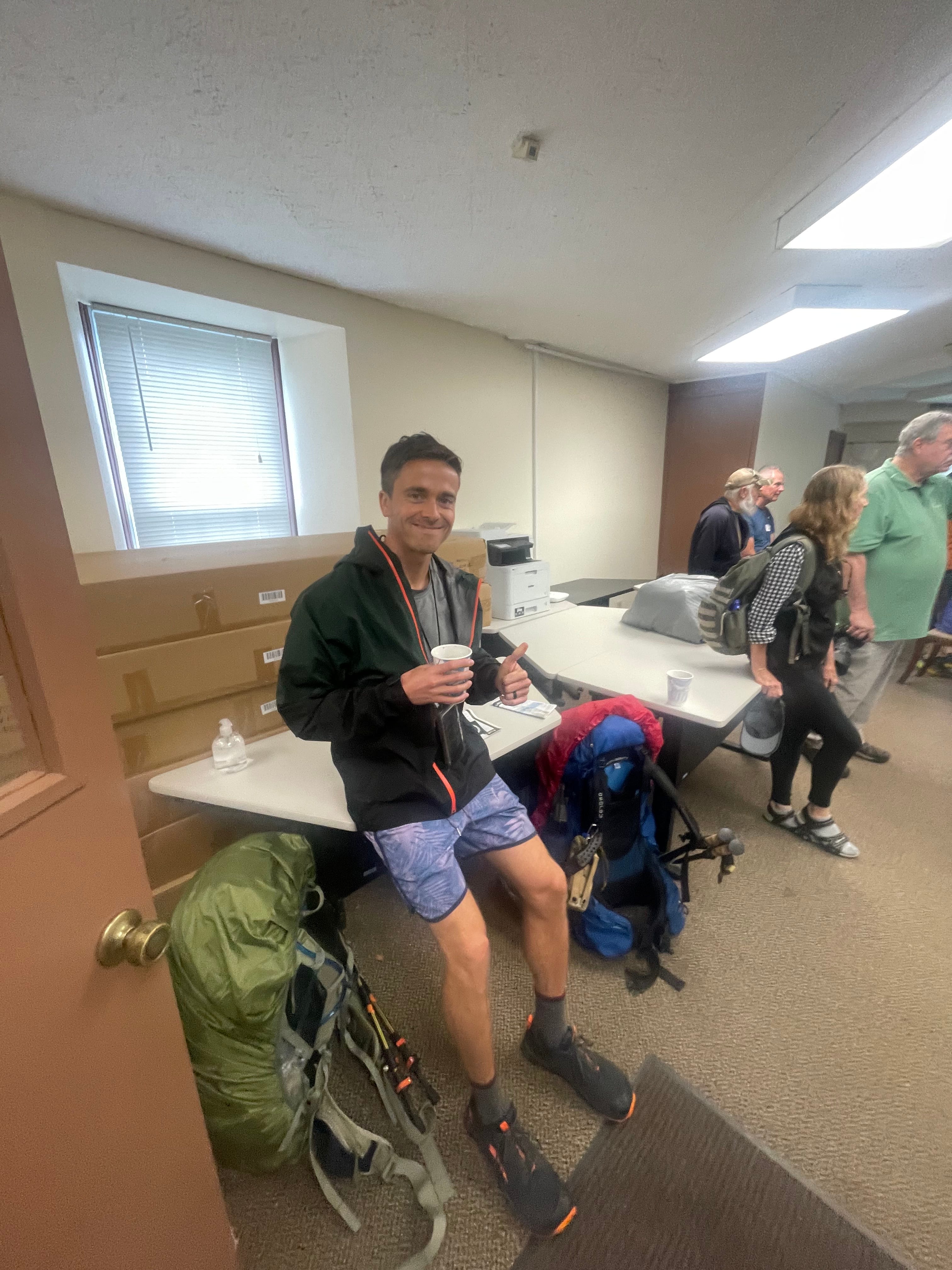
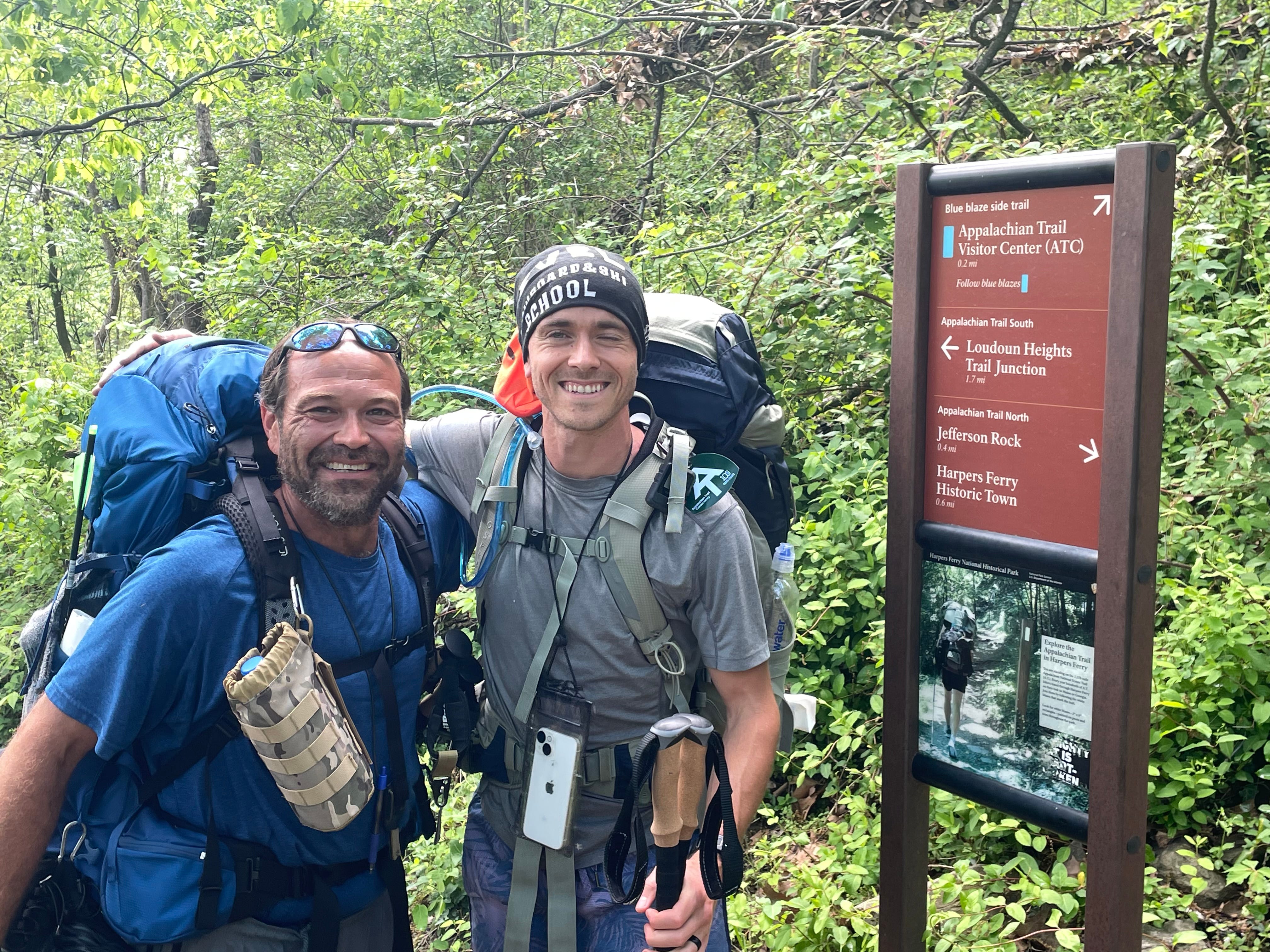
After a day’s drive from my mom’s house in southern IL, we arrived in Harper’s Ferry, WV, for the Flip-Flop kick-off meeting. After some free coffee and snacks and a few talks on how to respect the trail and fellow hikers (and stay alive and Lyme disease-free), we were let loose. Most people stayed for breakfast and a formal sendoff the next morning, but I was itching to get moving, so we began hiking around 2 pm.
Before I go further, I don’t think I’ll go into detail on each mile of the trail in this journal. I kept a pretty thorough video journal, so I don’t feel called to share every daily detail of the adventure. What I do intend to use this journal for, as per usual, is a place for me to emotionally process and reflect. And I think this reflection will be on physical pain and suffering. So buckle in.
From 2-5 pm, we covered seven miles to our first campsite, and I distinctly remember how sore my shoulders were. I was one day in, and already I felt like I could use a massage and a chiropractor.
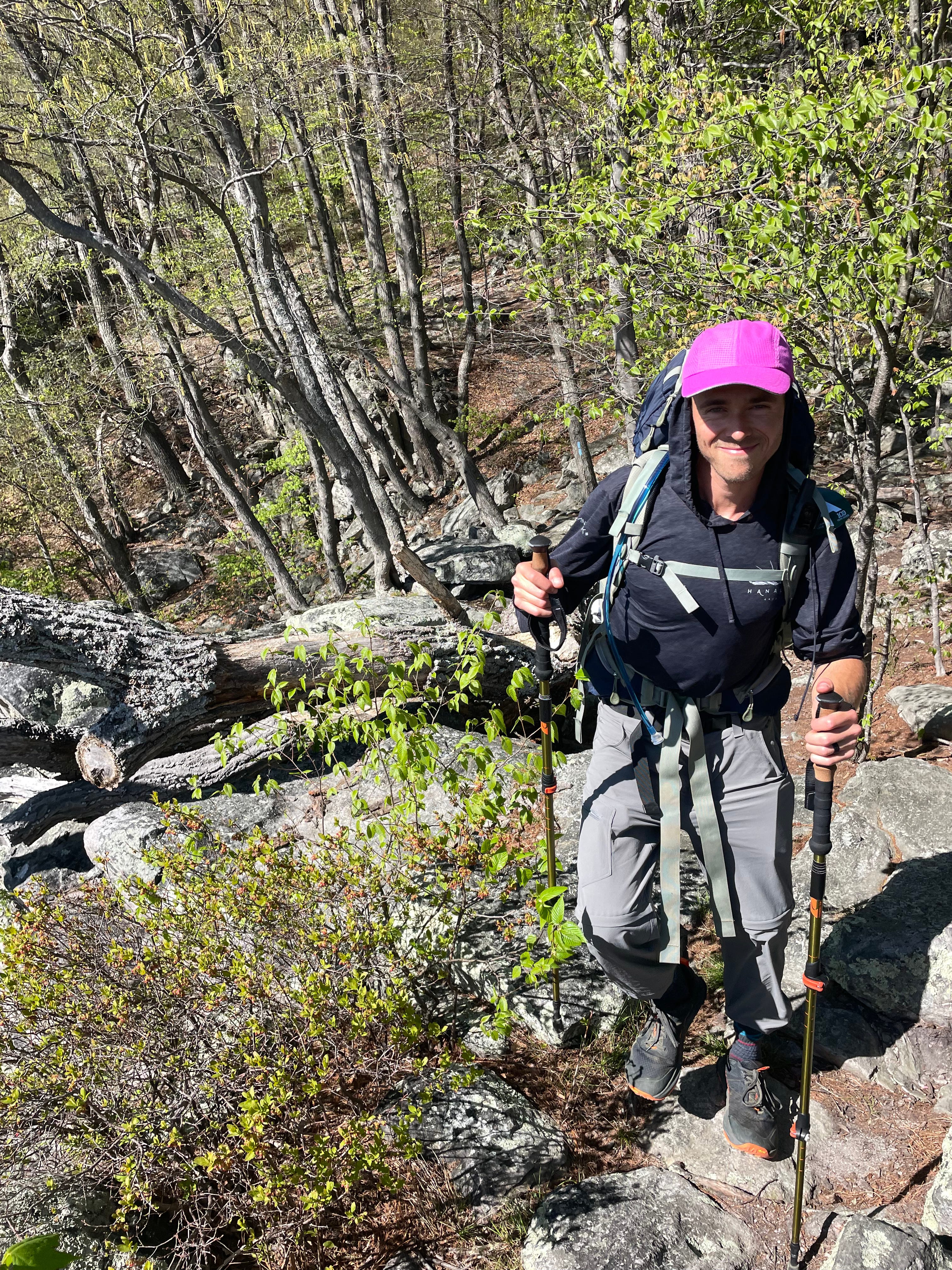
I wasn’t overly concerned, however. I figured it was going to take a while for my back to get used to carrying between 30 and 50 pounds. While I later found out that many of my fellow hikers kept their total bag weight under 30 pounds, I had a base weight of 20 and carried roughly 30 pounds in food and water. In comparison to most others, I took way more than I needed. My brain said it was out of practicality, a healthy fear of starvation or dehydration.
To the undiscerning adventurer, this sounds reasonable. However, the AT is one of the most popular long trails, passing through around 57 towns, ranging from small to large. That means many opportunities to stop in a town every few days to resupply. I was of the mind that it ultimately would slow me down to stop in every town to stock up, so I figured I’d carry enough to last at least a week at a time. A few extra pounds isn’t that big a deal after all?
Yes. Yes, it is a big deal. Especially when you’re traveling hundreds of miles up and down mountainous terrain on foot.
It also didn’t help that, as a vegetarian, I was concerned I wouldn’t get enough proper food to eat in some of the smaller towns, so I had my mom ship me a care package every two weeks. I am very intentional about getting my macro and micro nutrients daily, so I had scientifically planned these foods out before leaving.
That meant that for the week after receiving a care package, I was carrying nearly two weeks’ worth of the foods she sent; things I couldn’t easily supplement at small local grocery stores (freeze-dried veggies, protein sources, veggie broth, 7lbs of homemade green drink powder, etc.).
In addition to an overabundance of food, I also commonly carried way more water than I needed. Despite using an app that told me how many more miles I had until the next stream, I figured it would be easier and save me time to just brute force carry enough for most of the day. It’s just water, right? If I just muscled it on my back, I wouldn’t waste precious seconds planning and stopping at every stream to refill.
Does that sound stupid to you? Because now, in hindsight, it sure does to me. You see, I weigh around 150 lbs. So when I’m carrying between 30 and 50 pounds on my back, I’m lugging around an extra one-third of my body weight. That would be fine for a mile or two, maybe. But not 20 per day with 5,000–7,000 feet in elevation gain.
Even though, as I mentioned in my last post, “Carry only what matters,” I was beginning my crash course in essentialism, it would take me a long time to realize that overabundance—even in life-sustaining resources like food and water—isn’t necessarily beneficial.
Even weeks later, when I understood that most other people had way lighter packs than I did, I rationalized. My fear-based mind said, “What if something bad happens and I’m injured or stuck? I’ll need the extra food.” So my body paid the price of that fear-based overpacking.
Needless to say, I’ll save the culmination of that lesson for a later time. In the meantime, I was just finishing up my first day (half day, really), when the imminent thought that you can never truly prepare for entered my mind: this was going to be much harder than I ever imagined.
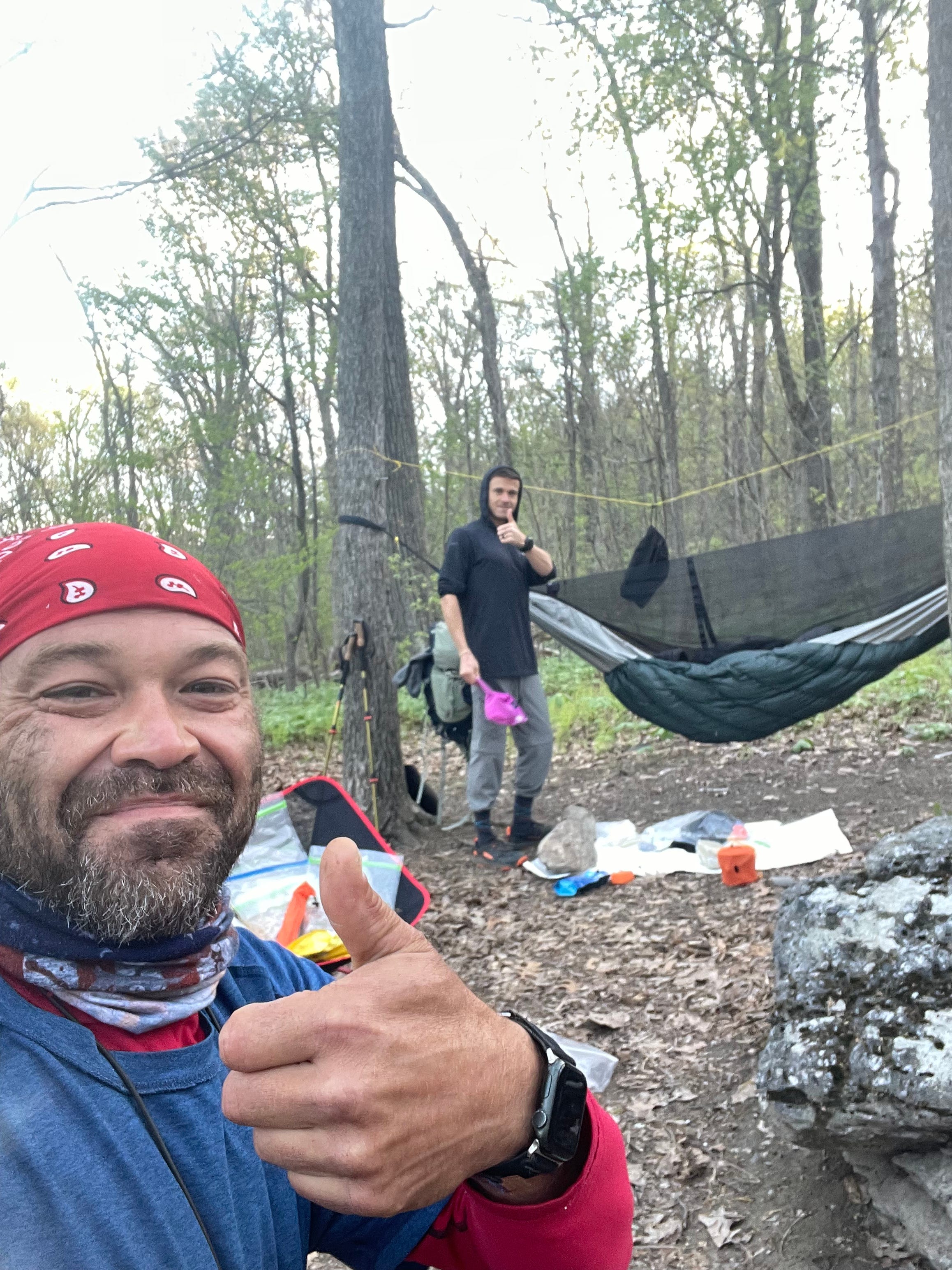
I had walked 7 miles, and I was exhausted. Only 1,177 miles left to Katahdin. Setting up my hammock and tarp that night on the ridge we had chosen to sleep on, with the wind constantly blowing away my progress before my amateur fingers had a chance to properly tie their knots, I knew I was in for an adventure.
I had done plenty of hard things already in my life. When I was 18, I moved out of my home and became financially independent. When I was 20, I helped found a startup company. When I was 21, I started selling educational systems door-to-door for 80+ hours a week during the summer with the nation’s oldest direct-selling company, Southwestern Advantage. It’s often called one of the most difficult selling programs available to young adults, and though, like most people, I had wanted to quit the first week, I thrived there. Later, I quit my high-paying job as a sales manager at the same company to leave behind all our worldly comforts and move to India with my wife to pursue my spiritual path.
This wasn’t my first physical or metaphorical mountain, so to speak. As I mentally prepared for this adventure, I assumed it would just be another notch on my belt of crazy life choices.
What I wasn’t prepared for, however, was how physically demanding it was going to be. I was an excellent high school cross-country runner and generally maintain good physical condition. When I was around 24, I ran a marathon with minimal training and finished in 3 hours and 36 minutes. Even today, I wouldn’t say I’m in peak physical condition, but I eat quite healthily and stay active.
I know this all likely sounds like a subtle brag (and let’s be real, it kinda is), but I’m bragging for a reason. Prior to starting the trail, I would have considered myself to have great physical prowess and an affinity for endurance activities. Hell, I hike 14ers in Colorado for fun.
But none of this seemed to prepare me for the reality of lugging an overweight backpack through 1,200 miles of hot, tick-infested wilderness.
In addition to the strain on my back from the extra weight I was carrying, my knees immediately took a brutal beating. I had prepared for this before the trail, doing knee strengthening exercises fairly consistently for the months leading up to my start date. But I just think that no matter how much prep one does, the human body is not built to withstand the constant physical demands of hiking every day through the mountains with your life’s belongings strapped to your back.
The body needs rest after physical stress in order to heal and repair. But on the trail, you hike, sleep, and then get up and hike some more. There’s only so much repair the body can do under those constraints.
“Hey, dum dum, why didn’t you just slow down and have shorter mileage days?” Why? Because the human mind is a bit insane. At least, mine is. I’ll get to that more in a later post.
The first week was tough, but it was really the second week that broke me.
During a particularly long day (I think Joe and I ended up doing 27 miles, which was not ideal for how “green” we still were on the trail), I cried for most of the last mile. Partly because every step downhill felt like being stabbed in the knee, and partly, probably, out of sheer exhaustion.
Every step shot pain up my leg, and I remember wondering if I would be able to heal from it, or if it would eventually turn into an injury that took me out. That thought scared me more than the pain.
At the end of that day, we ended up in a town and got to eat in a restaurant for the first time since starting. I think in modern society, we often take food for granted, but not on the trail. There’s something extra special about a meal you didn’t have to carry on your back and prepare in a small pot on the dirt floor outside your hammock.
That veggie burger and fries tasted like earthly salvation. And the restaurant owner was kind enough to let us sleep behind the restaurant that night. This may sound like an unusual gesture of kindness to some of you, and at first, it was to me, too.
But I quickly realized that people who live and work along the AT really enjoy taking care of hikers. I have countless stories of “trail angels” that blessed me with compassion and generosity along the way, but I’ll save those stories for another post.
I recall going to sleep that night under the soothing effects of the Advil the restaurant owner had given me. As I lay in my hammock, thinking about how difficult the day had been—and how, just hours before, I had been crying from pain and frustration—I remember feeling a sense of determination.
This had been a gauntlet day. I had been to this place before, and I knew that when I pushed through, I not only came out stronger, but I also came out more resolute. I was going to figure out how to help heal my knee. I was going to make it to Katahdin.
Little did I know that many more gauntlet days lay ahead.
As an athlete a hiker included...I enjoy reading your trekking journey simply because it's good pain that some how we tend to repeat. We make decisions and while trekking you ask yourself a million questions. " How did I get here?" "Why?" It all makes sense at the end of the journey.
I enjoy following along with your journeys- I am especially glad I read through this one. Maybe you should have brought your skateboard. It would have made the food so much more light in your journey. Or you could have carried the skateboard too. Tough choice. Skateboard or no skateboard. Anyhow, I am glad they welcomed you as a wary traveler at their restaurant. As always, thanks for your sage wisdom, and a nod to the Southwestern Advantage days.